
Post Name

Swirl flaps are a BMW system that has been introduced to help burn the fuel mixture in the cylinder better due to the fact that diesel engines do not have throttle valves and it is not possible to adjust the air-fuel ratio. A diesel engine without vortex valves operates between a poor and a rich fuel mixture, because the only way to regulate it is through fuel injection.

Design of the first generation swirl flaps that are made of made of metal.
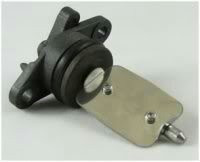
Unfortunately, swirl flaps are responsible for countless damaged engines and costly repairs due to design errors or metal fatigue. Once damaged, the cylinder sucks them in and causes great damage.

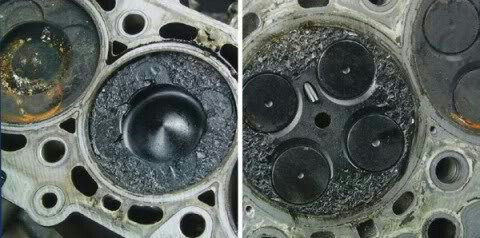
This is how damaged valves damage the cylinder.
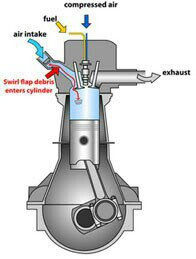
Typical swirl flaps  suction damage.
The vortex valves are positioned in the inlet and are controlled by vacuum (DDE 4.0) or electrically (DDE5.0 / DDE6.4) by the engine ECU.

Effects of malfunctioning valves:

  • Swirl valves are  stuck in open position: Deterioration of exhaust gas performance at lower speeds.
  • Swirl valves are stuck in closed position: Approximate power loss of 10% at high engine speeds.

How swirl flaps work:

Performance characteristics:

The vortex valves are in the closed position, at low engine speeds and small amounts of fuel injected (controlled by the ECU card).

They open under the following conditions:

  1. coolant temperature <14 ° C OR * fuel quantity> 24 mg OR
  2. engine speed 2250 rpm OR
  3. inlet air temperature <-5 ° C

BMW and Pierburg have decided to produce diesel engines with metal vortex valves. The speed at which the pistons in the diesel engine operate is at least 60 rpm, so a sucked vortex valve will break and cause a number of damages inside the engine.

In most cases, one or more pistons are severely damaged, as a bonus you get valves, in some cases a head or turbocharger. And this combination with a BMW engine is like a cumulative jackpot  🙂

In 2004, BMW began work on the problem and improved the design, however, a number of owners reported ongoing problems in this area.

The solution to this problem is by removing the vortex valves and plugging, which does not affect the performance of the engine and at the same time, you can safely pass the exhaust test.

Engines:

M47 (136hp VP44 fuel pump) has no valves.

M47N common rail engine (including M47N / M47TU / M47TUD20) (150hp. Face lift model from 2001 -) has valves.

M57 engines (M57D) (525d & 187hp. 330d) cars with manual transmission do not have valves, but those with automatic have.

M57N engines (M57TUD) (525d & 330d 204hp) have vortex valves.

Ruined swirl flaps:

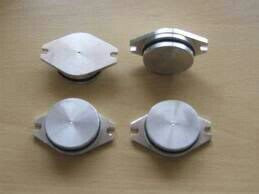
The plugs that replace the vortex valves are easy to find on the internet, but you can also find them here on our website.

Typical plugs:
 

Disassembly of vortex valves:

The vortex valves can be safely dismantled and in most cases if they are  removed properly no loss of power is felt.

Final list of models for which vortex valves are installed:

Engine: M47N/M47TU/M47TUD20

Applications:

* 110 kW (148 hp) and 330 N·m (243 lb·ft)

o E46 320d 2001-2005

o E83 X3 2.0d (up to end of 2006)

Engine: M47TU2D20

The engine was updated again in 2004 as the M47TU2D20. Still at 1995 cc, it produced more power across the range.

Applications:

* 120 kW (161 hp) and 340 N·m (251 lb·ft)

E60/E61 520d

E87 120d

E90/E91 320d

E83 X3 2.0d (end of 2006 onwards)

Engine: M57/M57D25

M57D25 was introduced in 2000.

Applications:

* 166 PS (122 kW; 164 hp) at 4000 rpm, 350 N·m (260 lb·ft) at 2000-2500 rpm with a 4750 rpm redline, models:

2000-2003 E39 525d *Vehicles With Automatic Transmission ONLY*

Engine: M57N/M57TU/M57TUD25

M57TUD25 was introduced in 2004.

Applications:

* 177 PS (130 kW; 175 hp) at 4000 rpm, 400 N·m (300 lb·ft) at 2000-2750 rpm models:

E60/E61 525d

Engine: M57/M57D30

M57D30, also called M57D29, was introduced in 1998.

Applications:

* 184 PS (135 kW; 181 hp)@4000, 390 N·m (290 lb·ft)@1750-3200 models:

E39 530d *Vehicles With Automatic Transmission ONLY*

E46 330d/330xd *Vehicles With Automatic Transmission ONLY*

* 184 PS (135 kW; 181 hp)@4000, 410 N·m (300 lb·ft)@2000-3000 models:

E38 730d *Vehicles With Automatic Transmission ONLY*

E53 X5 3.0d

* 193 PS (142 kW; 190 hp)@4000, 410 N·m (300 lb·ft)@1750-3000 models:

E38 730d

E39 530d

Engine: M57N/M57TU/M57TUD30

M57TUD30 was introduced in 2002. It originally produced 160 kW (215 hp) at 4000 rpm and 500 N·m (370 lb·ft) at 2000-2750 rpm, but was tweaked for 150 kW (201 hp) at 4000 rpm and 410 N·m (300 lb·ft) at 1500-3250 rpm for 2003 and again for 200 kW (268 hp) at 4000 rpm and 560 N·m (410 lb·ft) at 2000-2250 rpm in 2004.

Applications:

* 204 PS (150 kW; 201 hp)@4000, 410 N·m (300 lb·ft)@1500-3250 models:

E46 330d/330Cd/330xd

E83 X3 3.0d

* 218 PS (160 kW; 215 hp)@4000, 500 N·m (370 lb·ft)@2000-2750 models:

E53 X5 3.0d

E60/E61 530d/530xd

E65 730d

* 272 PS (200 kW; 268 hp)@4000, 560 N·m (410 lb·ft)@2000-2250

E60/E61 535d

* 245 PS (180 kW; 242 hp)@4000, 500 N·m (370 lb·ft)@2000-2250

* 286 PS (210 kW; 282 hp)@4000, 580 N·m (430 lb·ft)@2000-2250

Engine: M57TU2D30

M57TU2D30 was introduced in 2007, making its debut in the facelifted E60 and E61.

* M57TU2D30-UL: 197 PS (145 kW; 194 hp)

* M57TU2D30-OL: 235 PS (173 kW; 232 hp)@4000, 500 N·m (370 lb·ft)@2000-2750

* M57TU2D30-TOP: 286 PS (210 kW; 282 hp), 580 N·m (430 lb·ft)

Applications:

* 197 PS (145 kW; 194 hp), 400 N·m (300 lb·ft) models:

E90/E91/E92 325d

E60/E61 525d/525xd

* 231 PS (170 kW; 228 hp)@4000, 500 N·m (370 lb·ft)@2000-2750 models:

E65 730d

E90/E91 325d

E90/E91 330d/330xd

* 235 PS (173 kW; 232 hp) models:

E60/E61, BMW E70, BMW E71

* 286 PS (210 kW; 282 hp), 580 N·m (430 lb·ft) models:

E60/E61 535d

E70 X5 3.0sd

E71 X6 xDrive35d

E83 X3 3.0sd

E90/E91 335d

The above models are listed for information only if you want to to make sure your engine has valves installed, please contact a competent person.

Please note that the information described above is for informational purposes only and does not claim to be reliable. Mr-key.com is not responsible for any repair work you undertake that is related to the topic described in this article.

Kapcsolódó Bejegyzések

The Evolution of BMW: A Journey Through Innovation and Design

The Evolution of BMW: A Journey Through Innovation and Design

BMW, a name synonymous with luxury, precision, and performance, has a fascinating history marked by relentless innovation. Its journey, from humble beginnings to becoming a global icon of the automotive industry, reflects an enduring commitment to engineering excellence and design evolution. Let’s take a closer look at how BMW’s story has unfolded over the decades, captivating car enthusiasts around the world. The Early Days: Born in Aviation BMW’s story began in the early 20th century, not with cars but with aircraft engines. The company’s roots in aviation are symbolized in its logo, representing a propeller against a blue sky. During World War I, BMW earned recognition for its groundbreaking aircraft engine designs, which were known for their power and reliability. However, with the end of the war came restrictions on aircraft production, prompting BMW to pivot its focus. By the 1920s, BMW shifted gears, literally and figuratively, entering the motorcycle and automotive markets. This transition laid the foundation for the brand’s future. Breaking Into the Automotive World In 1928, BMW launched its first car, the Dixi 3/15, a licensed version of the British Austin 7. Though modest, this compact car symbolized the brand’s entry into the competitive automotive industry. By the 1930s, BMW began developing its own models, showcasing innovation with designs like the 328 Roadster. Known for its sleek aesthetics and impressive performance, the 328 became a motorsport legend, solidifying BMW’s reputation for engineering excellence. Post-War Challenges and Resilience World War II brought both opportunities and challenges for BMW. The company produced military vehicles and engines, which left its facilities heavily damaged by the end of the war. Faced with a ban on manufacturing vehicles, BMW pivoted once again, producing household appliances and bicycles to survive. It wasn’t until the 1950s that BMW returned to car manufacturing, introducing models like the BMW 501. This period was marked by financial struggles, but BMW’s resilience paid off with the release of the Isetta microcar. Affectionately called the “bubble car,” the Isetta was a quirky, affordable solution for post-war consumers, helping the brand regain stability. The 1960s: A New Era of Innovation The 1960s marked a turning point for BMW, as the company introduced the New Class (Neue Klasse) series. These sporty sedans, including the iconic BMW 2002, combined performance with practicality, appealing to a growing market of car enthusiasts. This era also saw the birth of BMW’s reputation for building “ultimate driving machines,” emphasizing driving pleasure as a core philosophy. With its newfound success, BMW expanded globally, entering new markets and establishing a loyal fan base. The New Class not only saved the company from financial troubles but also set the stage for its future success. The Rise of Luxury and Performance By the 1970s and 1980s, BMW had firmly established itself as a luxury brand, offering high-performance vehicles that appealed to both casual drivers and motorsport enthusiasts. The introduction of the BMW 3 Series in 1975 marked the beginning of an enduring legacy. Known for its dynamic handling and elegant design, the 3 Series became a benchmark for compact executive cars. During this time, BMW also made significant strides in motorsport, launching its iconic M division. The BMW M1 supercar and the high-performance M3 further cemented the brand’s position as a leader in both luxury and performance. Embracing Technology and Sustainability The late 20th and early 21st centuries brought rapid technological advancements, and BMW was quick to adapt. The brand embraced cutting-edge features like navigation systems, adaptive cruise control, and hybrid powertrains, blending innovation with sustainability. The introduction of the BMW i Series marked a bold step toward electric mobility. Models like the i3 and i8 showcased the brand’s commitment to reducing emissions while maintaining its signature performance and luxury. A Glimpse Into the Future Today, BMW continues to evolve, pushing the boundaries of automotive technology. From autonomous driving to AI-powered interfaces, the brand is redefining what it means to drive in the 21st century. The development of fully electric models, like the BMW iX , reflects the brand’s vision for a sustainable future. Why BMW’s Evolution Matters Understanding BMW’s journey helps you appreciate the brand’s dedication to innovation and quality. Whether you’re a loyal BMW owner or an aspiring enthusiast, knowing the history of this iconic brand highlights why it remains a top choice for drivers worldwide. Pro Tips for BMW Owners Maintain Regular Service: Keep your BMW in top condition with regular maintenance. Use Genuine Parts: Opt for authentic components to ensure reliability and performance. Stay Informed: Familiarize yourself with your BMW’s features and innovations to maximize its potential. A Legacy of Excellence From crafting propellers to creating luxury vehicles, BMW’s evolution is a testament to its commitment to innovation and performance. The brand’s ability to adapt and excel through challenges has earned it a permanent place in automotive history. As BMW continues to innovate, one thing remains constant: its promise to deliver an unparalleled driving experience.

The Importance of Regularly Updating Your Car's Key Fob Software

The Importance of Regularly Updating Your Car's Key Fob Software

In the digital age, vehicle security has evolved beyond traditional locks and keys. Modern cars rely on sophisticated electronic systems, with key fobs playing a crucial role in convenience and safety. However, many car owners overlook the importance of regularly updating their key fob software. Like any other electronic device, key fobs require updates to function optimally and protect against emerging threats. This article explores why keeping your car's key fob software up-to-date is essential for security, functionality, and overall vehicle performance. Enhanced Security Against Keyless Theft One of the primary reasons to update your key fob software is to safeguard your vehicle against hacking and theft. Car thieves have become increasingly tech-savvy, using methods such as relay attacks and key cloning to gain unauthorized access to vehicles. Manufacturers frequently release software updates to counteract these evolving threats, strengthening encryption protocols and implementing new security measures. Regular updates ensure that your vehicle remains protected against the latest hacking techniques, reducing the risk of keyless car theft. Improved Functionality and Performance Software updates do more than just enhance security; they also improve the functionality of your key fob. Updates can optimize the communication between the key fob and the vehicle, ensuring seamless operation of features like remote start, keyless entry, and trunk access. Some updates may also introduce new capabilities, such as extended remote range or better battery efficiency. By keeping your key fob software up to date, you maximize the effectiveness of these features, enhancing your overall driving experience. Fixing Bugs and Resolving Malfunctions Like any software-based system, key fobs can experience glitches or bugs over time. You may notice issues such as delayed responses, intermittent connectivity, or complete failure to unlock or start your car. In many cases, these problems stem from outdated software. Manufacturers release updates to fix such bugs, ensuring that your key fob operates smoothly. If you’ve been experiencing issues with your key fob, checking for software updates is a simple yet effective solution. Compatibility with Newer Vehicle Features Automakers continuously upgrade their vehicle software, adding new safety and convenience features. To ensure compatibility, your key fob software must also stay updated. For example, if your car receives an over-the-air (OTA) update that enhances security protocols, an outdated key fob may no longer function correctly. Keeping both your vehicle and key fob software current ensures seamless integration, preventing functionality issues and maintaining an optimal driving experience. How to Update Your Key Fob Software Updating your key fob software may vary depending on the manufacturer and model of your vehicle. Here are a few common ways to ensure your key fob is up to date: Check the Manufacturer’s Website – Automakers often release software updates for key fobs and other electronic components on their official websites. Look for any available updates specific to your vehicle model. Visit a Dealership or Certified Service Center – Many car manufacturers require key fob updates to be installed at an authorized dealership or service center. Technicians can update your key fob and ensure it is properly synced with your vehicle. Use a Mobile App (If Available) – Some modern car brands offer mobile apps that allow users to update their key fob software remotely. Check if your vehicle’s manufacturer provides such an option. Consult Your Owner’s Manual – Your car’s manual may provide instructions on how to check for key fob software updates and whether they can be performed manually. Regularly updating your car's key fob software is a simple yet crucial step in maintaining vehicle security and functionality. Updates help protect against theft, fix software glitches, and ensure compatibility with new vehicle features. Given the increasing reliance on electronic key systems, staying proactive about updates is essential. Whether through a dealership visit or an online update, keeping your key fob’s software current will help you enjoy a safer and more convenient driving experience. Stay informed, stay updated, and keep your vehicle secure.

The Secret to Smooth Locks: How (and Why) to Lubricate Your Locks Like a Pro

The Secret to Smooth Locks: How (and Why) to Lubricate Your Locks Like a Pro

Regular lock maintenance is essential to prevent key jamming or lock failure. Proper lubrication reduces wear and tear, ensures smooth operation, and extends the lifespan of your locks. A well-lubricated lock decreases the risk of your key getting stuck or breaking inside the lock—an inconvenient and costly problem. At MR-KEY , we understand the importance of well-maintained locks and want to help you keep yours in top condition. How Often Should You Lubricate Your Locks? For most locks, lubricating them every three to six months is sufficient. However, locks exposed to extreme weather conditions—such as those on towbars, roof racks, or outdoor gates—require more frequent maintenance. Rain, dust, and freezing temperatures can cause internal components to stick, making it difficult to insert or turn the key. If you notice resistance when using a lock, it’s time for lubrication. What Lubricant Should You Use for Locks? Choosing the right lubricant is crucial for long-term lock performance. Here are the best options: • Teflon-based (PTFE) spray – Forms a protective film inside the lock, reducing friction and repelling dust buildup. • Dry silicone spray – Excellent for outdoor locks as it resists moisture without attracting dirt. • WD-40 Specialist Dry PTFE or White Lithium Grease – Unlike regular WD-40, these provide long-lasting lubrication and protection against corrosion. • Graphite powder – A great choice for older locks but should not be used if there’s oil residue inside the lock. While WD-40 Multi-Use is a quick fix for stuck locks, it is primarily a cleaner rather than a long-term lubricant. If used, follow up with a dry lubricant to prevent dirt accumulation inside the lock. How to Lubricate a Lock If your lock is functioning properly but feels slightly stiff, follow these steps: 1. Clean the Lock – Insert and remove the key a few times to dislodge debris, wiping it clean each time. 2. Apply the Lubricant – Insert the spray straw into the keyhole and apply two short bursts of lubricant. 3. Work the Lock – Insert and turn the key multiple times to distribute the lubricant inside. 4. Wipe Excess Lubricant – Remove any residue from the key and lock exterior to prevent dirt buildup. For graphite powder , follow the manufacturer’s specific instructions, as overapplication can lead to clumping inside the lock. Special Care for Towbar and Roof Rack Locks Locks on towbars and roof racks are exposed to harsher conditions than typical door locks. To keep them in good shape: • Regularly inspect them for stiffness or corrosion. • Apply dry silicone spray or PTFE lubricant for lasting protection. • If the lock is exposed to frequent moisture, white lithium grease offers superior water resistance. Lock It in: The Key to Long-Lasting Security Regular lock maintenance is a small effort that prevents big problems. By keeping your locks clean and properly lubricated—especially those exposed to the elements—you can avoid costly repairs and ensure they function smoothly for years. For high-quality lock maintenance products, visit MR-KEY and keep your locks in perfect working condition. A little maintenance goes a long way in ensuring security and peace of mind!

Key Lock Standards for Ultimate Vehicle Security

Key Lock Standards for Ultimate Vehicle Security

In today’s world, where vehicle security is more important than ever, understanding the various key lock standards is crucial for protecting your car against theft. Whether you own a luxury vehicle, a family car, or a fleet of commercial vehicles, knowing how different key locking systems work and what standards are in place can ensure that your vehicle remains secure. In this article, we’ll explore the key lock standards that every car owner should know, what makes a secure system, and how they help protect your car from potential threats. Understanding Key Lock Standards Key lock systems play an essential role in vehicle security. Modern car locks are not just about preventing unauthorized entry but also about preventing the car from being started or stolen. A well-designed key lock system integrates advanced technologies that enhance the protection of your vehicle. There are several key lock standards in the automotive industry, each with its specific focus on improving security and minimizing risks. These standards include traditional mechanical key locks, transponder keys, keyless entry systems, and smart keys. Mechanical Key Locks: The Traditional Standard Mechanical key locks are the most basic and traditional form of car locking systems. For many years, these locks were the standard, and they are still widely used today, particularly in older vehicles. A mechanical key lock involves a physical key that is inserted into the door or ignition switch to gain access to the car or start the engine. While simple, mechanical locks are not as secure as newer systems. Over time, thieves have developed methods to bypass or pick mechanical locks, making them less effective for modern vehicle security. However, many vehicles still rely on these locks, and they remain a crucial part of the overall security system. Transponder Keys: A Step Up in Security In response to the vulnerabilities of mechanical key locks, the automotive industry introduced transponder keys in the 1990s. A transponder key is equipped with a microchip embedded inside the key fob. When the key is inserted into the ignition, the microchip sends a signal to the vehicle's engine control unit (ECU), verifying that the key is legitimate and authorized to start the car. Transponder keys significantly enhance vehicle security by making it much more difficult for thieves to clone the key. Without the proper code, the car won’t start, even if the thief has an exact replica of the physical key. This added layer of security has made transponder keys the industry standard in many vehicles. Keyless Entry Systems: Convenience Meets Security Keyless entry systems, also known as remote entry systems, are now common in modern vehicles. These systems allow you to unlock or lock your car without inserting a key. Instead, the car communicates wirelessly with a key fob, sending a unique signal that grants access. The key fob typically includes buttons to lock or unlock the doors and sometimes to start the engine remotely. The convenience of keyless entry is undeniable, but it also introduces certain vulnerabilities. Keyless entry systems rely on wireless signals, which can sometimes be intercepted or duplicated by thieves using sophisticated equipment. To counteract these risks, manufacturers have developed enhanced encryption protocols and rolling codes that change each time the system is used, making it more challenging to hack into the system. Smart Keys: The Next Level of Vehicle Security Smart keys represent the latest evolution in vehicle security. These keys go beyond the capabilities of traditional key fobs and keyless entry systems by offering features like proximity sensing and push-to-start functionality. Smart keys allow you to unlock and start your vehicle without physically touching the key fob. The system detects when the key fob is near the car and grants access automatically. Smart keys are highly secure, as they use advanced encryption methods and rolling codes to protect the vehicle from unauthorized access. In addition, the vehicle can be programmed to disable the engine if an unauthorized key is detected, providing an additional layer of security. International Security Standards for Vehicle Locks To ensure the security of vehicles globally, several international standards have been developed to guide manufacturers in creating secure key lock systems. Some of the most important standards include: ISO 9001 : This standard focuses on the quality management of products, including vehicle locking systems. It ensures that manufacturers meet specific quality control guidelines, which helps ensure the reliability and security of key lock systems. ISO 14298 : This is a more specific standard related to secure key management for vehicles, focusing on preventing unauthorized duplication and tampering with vehicle keys. EC Regulation 1303/2014 : This European regulation outlines the technical specifications for car security systems, including locking systems. It provides a framework to protect vehicles against unauthorized access, theft, and other security risks. Adhering to these standards ensures that vehicle manufacturers meet global security requirements and offer their customers reliable and effective security systems. Why Secure Key Locks Are Essential for Vehicle Protection With increasing car theft rates and sophisticated methods used by criminals, investing in a secure key lock system is no longer optional—it’s essential. A secure key lock system prevents unauthorized access to the vehicle and ensures that only legitimate owners or authorized individuals can use the vehicle. Each level of security, from mechanical locks to smart keys, offers a different degree of protection, and modern vehicles often incorporate multiple systems to strengthen security. The combination of these advanced technologies, alongside international security standards, provides vehicle owners with peace of mind knowing their vehicle is well-protected. Key lock standards have come a long way from the traditional mechanical locks of the past. Today’s vehicles rely on advanced technologies like transponder keys, keyless entry systems, and smart keys to provide higher levels of security. These systems are designed to make it as difficult as possible for thieves to bypass them, giving car owners confidence that their vehicles are protected. By understanding the different key lock standards and their capabilities, you can make informed decisions about your vehicle’s security and take steps to ensure that your car remains safe from theft. Whether you’re driving a new model or an older vehicle, upgrading or maintaining your key lock system can help safeguard your investment and provide peace of mind on the road.

Csevegjen velünk